
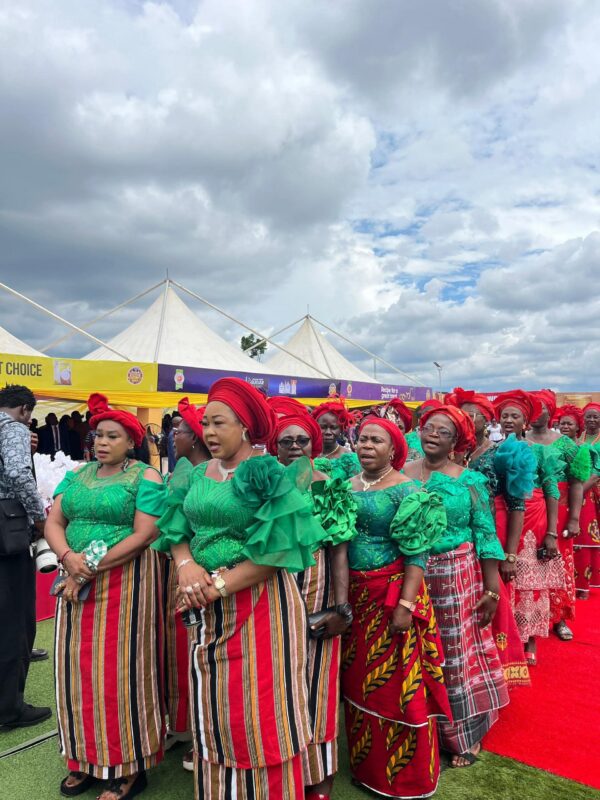
What Nigerian women’s annual meetings can teach us about preserving food, livelihoods and the future
Every August, the roads leading home carry more than returning daughters, mothers and sisters.
They carry ideas, money, experience and the possibility of collective action.
Across southeastern Nigeria, women gather in town halls, community centres, church compounds and family compounds. They discuss businesses, education, welfare and the future of their communities.
But there is another conversation worth bringing to the table:
What happens to our food after it leaves the farm?
Because between harvest and the dinner table lies one of agriculture’s greatest vulnerabilities: post-harvest loss.
Women Already Sit at the Centre of the Food System
Across communities in southeastern Nigeria, women are deeply involved in moving food from farms to households and markets.
They cultivate.
They process.
They trade.
They sell.
They preserve.
They feed families.
They manage businesses built around agricultural products.
So when women gather to discuss community development, post-harvest management is not a distant agricultural policy issue.
It is business. It is household economics. It is food security. It is community development.
Consider a woman who loses a significant portion of her fresh produce because she cannot keep it fresh long enough to sell.
That is not simply food waste.
It is lost working capital.
It is reduced household income.
It can mean less money for school fees, household needs or reinvestment in the business.
Preserving the harvest, therefore, can mean preserving much more than food.
What If the Next Conversation Was About Preservation?
Women’s annual meetings have long demonstrated the power of collective action.
Communities come together to support members, fund projects, establish businesses, improve infrastructure and address shared challenges.
Imagine bringing that same spirit to post-harvest management.
What food products are being lost in our community?
Why are they being lost?
How much income disappears with them?
What storage and preservation options are available?
What can we do collectively to reduce those losses?
These questions may sound simple.
But simple questions can lead to practical solutions.
A community might invest in better storage.
A women’s cooperative might explore collective marketing.
Farmers might receive training on post-harvest handling.
Traders might gain access to cold storage.
Community leaders might advocate for better food infrastructure.
The answer will look different from one community to another.
But the conversation needs to begin.
From August Meetings to Year-Round Impact
The strength of the August gathering lies in something development programmes often struggle to create: people, relationships and shared purpose in one place.
The women who meet in August may return to different cities and countries. They may work in different sectors and lead different businesses.
Yet many remain connected to their communities.
That connection is an asset.
Imagine a women’s association asking not only what it achieved last year, but:
“What food is our community losing, and what can we do about it?”
The answer could become a community project.
A partnership.
A training programme.
A collective preservation initiative.
Or the beginning of a conversation about bringing reliable cold-chain infrastructure closer to the farmers and traders who need it.
ColdHubs: Making Preservation Possible
At ColdHubs, we believe food preservation should be accessible to the people who need it most.
Our solar-powered cold-storage hubs provide farmers, traders, fisherfolk and other food businesses with access to refrigeration for preserving perishable products.
The principle is straightforward:
Preserve more of what has already been produced.
Because every harvest preserved protects the farmer’s effort.
Every product kept fresh protects a trader’s investment.
Every catch preserved protects a fisherfolk’s income.
And every kilogram of food that remains available strengthens the food system.
The August Gathering Can Be More Than a Meeting
There is something powerful about people returning home.
They bring resources.
They bring knowledge.
They bring networks.
Most importantly, they bring the ability to ask what their communities need next.
This August, perhaps that question should include food preservation.
Because the future of food security will not be built only in government offices or on farms.
It will also be built in markets, cooperatives, community halls, women’s associations and conversations around tables.
And sometimes, the most important development idea in the room may be the one that asks:
“How do we make sure that more of what we grow actually gets to the people who need it?”
The Conversation Starts Here
If you are part of a women’s association, cooperative, community group or agricultural organisation, bring post-harvest management to your next meeting.
Ask your members:
What food are we losing in our community, and what can we collectively do to preserve it?
The answer may be the beginning of a larger solution.
Because when communities preserve more of what they produce, they are not only reducing food loss.
They are protecting livelihoods, strengthening local economies and building a more resilient food system.
Let’s preserve the harvest. Together.