
For fresh produce, the battle against post-harvest loss begins long before food enters a cold room.
It starts from the moment a tomato is picked, a basket of peppers leaves the farm, or leafy vegetables are cut for the market.
From that point, the produce is still alive. It continues to respire, lose moisture and react to the temperature around it. The hotter the environment, the faster its quality can deteriorate.
This is why effective cold-chain management is not simply about putting food into refrigeration. It is about controlling temperature, handling and movement from harvest to market.
The Hidden Enemy: Field Heat
Fresh produce harvested under hot conditions carries what the cold-chain industry refers to as field heat.
If that heat remains trapped in the produce for too long, deterioration accelerates.
Vegetables may lose firmness. Fruits may ripen too quickly. Leafy produce can wilt, while tomatoes and peppers can become more vulnerable to bruising, microbial activity and eventual spoilage.
The Food and Agriculture Organization has long recognised temperature management as one of the most important tools for maintaining the quality of fresh produce after harvest.
For many perishable products, even relatively small increases in temperature can significantly increase the rate at which deterioration takes place.
This means the first few hours after harvesting can influence how much of the produce eventually reaches consumers in good condition.
Cold Storage Is Only Part of the Answer
There is an important distinction between pre-cooling and cold storage.
Pre-cooling is the rapid removal of heat from freshly harvested produce.
Cold storage, on the other hand, is mainly designed to maintain produce at an appropriate temperature after that initial heat has been reduced.
Putting very warm produce directly into a cold room and expecting the refrigeration system to solve every problem can place additional pressure on the cooling equipment and may slow the process of bringing the produce to the desired temperature.
This is why a strong cold chain must look beyond the cold room itself.
The journey should ideally begin with good harvesting practices, followed by protection from direct sunlight, sorting, appropriate packaging, rapid cooling where required, proper storage and temperature-controlled transportation.
Every stage matters.
The Journey From Farm to Consumer
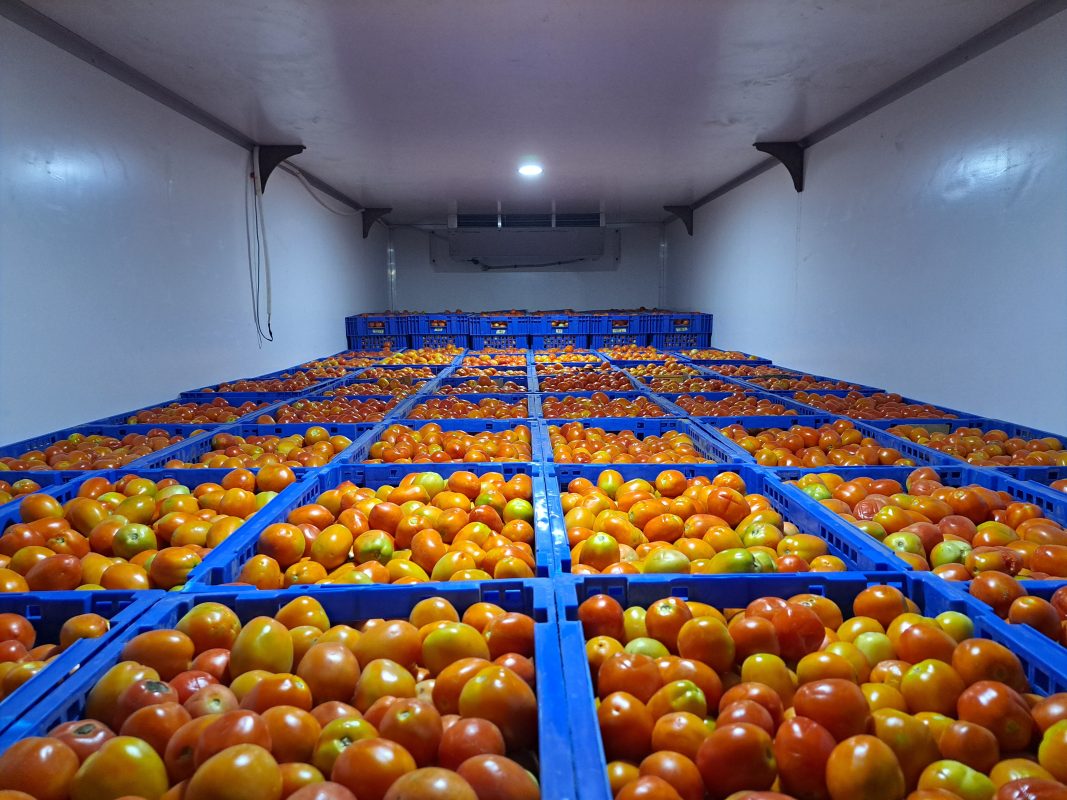
Consider a crate of tomatoes harvested on a hot afternoon.
If the tomatoes are left under the sun for several hours, packed tightly into poorly ventilated containers, transported over long distances in an open vehicle and only refrigerated much later, part of their commercial shelf life may already have been lost before cooling begins.
The tomatoes may still look acceptable when they arrive, but the deterioration process has already accelerated.
A stronger system looks different:
Harvest.
Move the produce quickly into shade.
Sort out damaged items.
Use suitable, ventilated crates.
Reduce field heat as early as possible.
Maintain the correct storage conditions.
Move the produce through temperature-controlled transportation where required.
Deliver it to markets and buyers without repeatedly breaking the cold chain.
That is what post-harvest management really looks like.
It is not one machine solving one problem.
It is a chain of decisions.
Why Packaging Matters Too
Temperature is critical, but it is not the only cause of post-harvest loss.
Poor handling can destroy fresh produce even when refrigeration is available.
Traditional baskets, sacks and overloaded containers can expose tomatoes, fruits and vegetables to crushing, bruising and poor ventilation during transportation.
Once produce is physically damaged, its shelf life can fall rapidly.
This is why reusable plastic crates are increasingly important within modern cold-chain systems.
They provide better protection, improve ventilation and make produce easier to stack and transport while reducing the physical damage that often occurs between farms and markets.
At ColdHubs, cold storage is therefore only one part of a broader approach that includes reusable crates, refrigerated transportation, IcePoints and digital tools designed to help producers, traders and businesses maintain product quality across the supply chain.
Preventing Loss Requires a System
Nigeria and many other African countries continue to invest heavily in increasing agricultural production.
But producing more food will not deliver its full economic value if significant quantities deteriorate before reaching consumers.
The industry must therefore ask a different question.
Not only:
How much food are we producing?
But also:
How much of what we produce are we successfully preserving?
The answer requires infrastructure, technology, financing and better post-harvest practices working together.
Farmers need access to appropriate handling tools.
Markets need reliable cooling infrastructure.
Transporters need temperature-controlled logistics.
Businesses need better information about storage conditions and product movement.
And these services must be affordable enough for smallholder farmers and traders to use.
The New Cold Chain Starts Earlier
The future of cold-chain development will not be measured simply by how many cold rooms are installed.
It will be measured by how effectively the entire journey of food is managed.
From the farm.
To the collection point.
Into storage.
Onto the vehicle.
Across the market.
And eventually to the consumer.
ColdHubs’ work in clean-energy-powered cooling is built around this wider understanding of post-harvest loss.
Because by the time visibly spoiled food reaches the market, the real story often began many hours earlier.
Preventing that loss means intervening earlier.
It means protecting food from the first critical hours after harvest and maintaining that protection throughout its journey.
That is the difference between simply providing refrigeration and building a modern cold chain.