
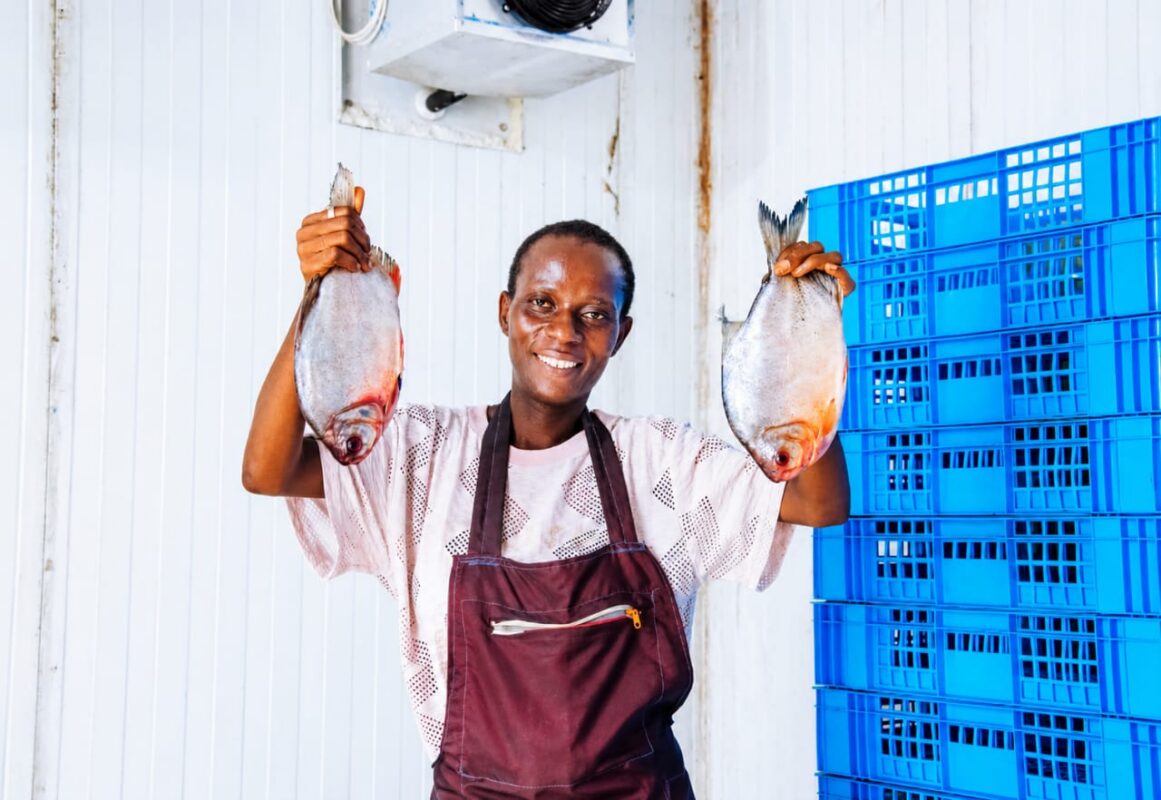
The Obvious Changes When A Community Has Access to Reliable Cold Storage?
A Look At The State of The Swali Market Two Months After The Launch.
What changes when a community that has spent years racing against food spoilage finally has access to reliable cold storage?
At first, it may look like a simple change in infrastructure.
A cold room built.
Solar panels installed.
Doors opened.
Traders brings their fresh produce for storage.
But for the people of Swali Market in Yenagoa, Bayelsa State, the change goes beyond the physical structure.
It changes what farmers, fisherfolk and traders can do with their food, their time and their businesses.
A Market Where Time Matters
Swali Market is one of Yenagoa’s major trading centres and an important destination for fresh food and fish in Bayelsa State.
Every day, farmers, fisherfolk, wholesalers and traders bring food into the market for consumers.
But fresh food comes with a challenge: Time.
Fish, meat, vegetables and other perishables cannot wait indefinitely for buyers.
Without reliable refrigeration, an unsold product can quickly become a loss.
For traders, this can create pressure to sell before the food deteriorates, even when the price is not favourable.
For fisherfolk, it can mean finding ice or alternative preservation methods simply to protect the day’s catch.
For families and consumers, it can mean less access to fresh food when products are lost before they reach the point of sale.
Reliable cold storage begins to change that equation.
From Rushing to Sell to Having More Time

For Godwin Friday, a meat seller at Swali Market, access to ColdHubs has changed how he manages unsold meat.
“Since ColdHubs came, we no longer rush to sell off our meats. We now store what we cannot finish, and when we bring back it’s still very fresh.”
That statement captures one of the most important changes cold storage can provide: time.
Instead of being forced to sell everything before the end of the day, traders can preserve unsold products and continue selling when customers return.
Cold storage does not guarantee a better price, but it can reduce the pressure to accept a poor price simply because the product is highly perishable.
From Travelling for Ice To Accessing It Locally
Before the Swali Hub, accessing ice could also mean travelling outside the immediate market area.
For Blessing John, an ice block seller at Swali Market, that was part of the daily reality.
“Before ColdHubs, I travelled as far as Port Harcourt just to get ice blocks. Now I can access them here easily whenever I need them.”
Reliable access to ice reduces the time and effort required to source basic cooling.
It also brings an important cold-chain resource closer to the people who depend on it.
For a busy market, that proximity matters.
From Drying Unsold Fish To Preserving It
For fish sellers, the ability to preserve unsold catch can be particularly important.
Mrs. Glory Amasuomo, a fish seller at Swali Market, described what she used to do with fish that remained unsold:
“I used to dry my remaining fish and sell it at a lower price. Now I store the fish that remains unsold, and it stays fresh until the next market day.”
Her experience shows that preservation can influence not only how food is stored, but also how it is sold.
Instead of immediately changing the product because it could not be sold fresh, she now has another option: preserve it and continue selling it fresh.
The Change Is Beyond the Cold Room
This is why the impact of cold storage should not be measured only by the number of cold rooms installed.
The more important question is:
What becomes possible because the cold room is there?
At Swali, access to reliable cold storage can mean:
- Traders have more time to sell perishable products.
- Unsold food can be preserved instead of immediately discarded or downgraded.
- Fisherfolk have better options for protecting their catch.
- Traders can reduce their dependence on emergency preservation methods.
- Consumers can access fresh food for longer.
- Less food is lost simply because there was nowhere cold enough to keep it.
These changes may appear small when considered individually.
But across a busy market, they can influence how businesses operate and how food moves through the local economy.
Infrastructure That Works for People
The Swali Hub was established to bring modern, solar-powered cold storage and ice-making closer to the people who need it.
But infrastructure only creates impact when people can use it.
That is why the relationship between ColdHubs and the Swali community matters.
The hub is not simply a facility standing inside a market.
It is part of the market’s food system.
It serves the trader who needs to preserve today’s unsold vegetables.
The fisherfolk who needs to protect a day’s catch.
The meat seller who wants to continue selling fresh products the following day.
And the consumer who expects food to arrive in good condition.
What Changes?
So, what changes when people have access to reliable cold storage?
The food lasts longer.
But so can the opportunity around it.
A trader gets more time.
A fisherfolk gets more options.
A business can protect more of its stock.
A consumer can have better access to fresh food.
And a community can begin to lose less of what it has already worked hard to produce.
The Swali Hub is therefore more than an expansion of ColdHubs’ network.
It is an example of what becomes possible when cold-chain infrastructure is placed where people actually need it.
Because when people have access to reliable cold storage, they do not simply preserve food. They gain more time, more choices, and greater control over the value of what they produce and sell.