
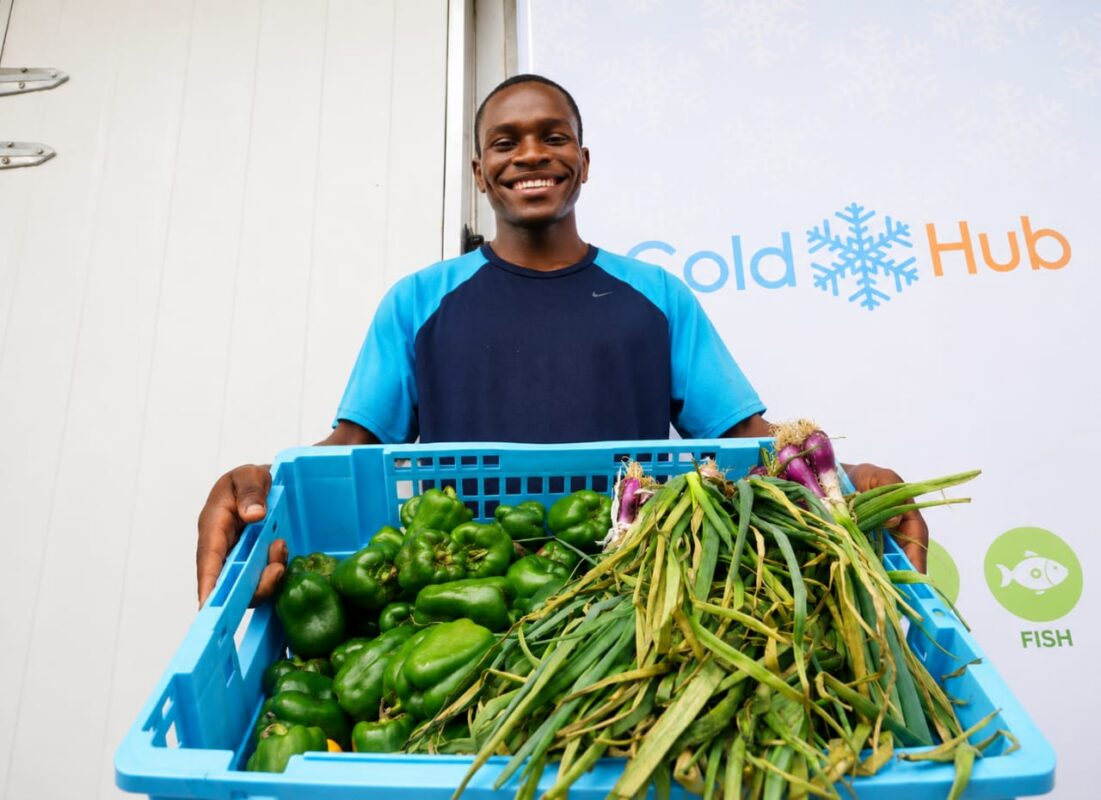
How lack of cold storage can turn a good harvest into a forced sale for a farmer or trader, selling fresh produce should be a business decision.
But when there is nowhere to safely store that produce, the decision can become a race against time.
A basket of tomatoes may be ready for the market today, but the farmer knows that waiting too long could mean spoilage. Fish needs to remain cold. Leafy vegetables lose quality quickly. Peppers, carrots and other fresh produce cannot simply sit in the heat indefinitely.
So the pressure begins.
Sell now or risk losing everything.
And sometimes, selling now means accepting a price that is far below what the produce could be worth
The Economics of Urgency
Consider a simple chain:
No cold storage → urgency → distress selling → lower prices → income loss
When farmers and traders cannot preserve perishable goods, they have limited control over when they sell.
If supply is high and prices are low, they may still have to sell.
If buyers are offering less than expected, they may have little choice.
If the market closes for a day or two, the risk becomes even greater.
The problem is not necessarily that the produce has no value.
The problem is that the seller has run out of time.
When Time Becomes a Business Asset
Cold storage changes that equation.
With access to reliable refrigeration, farmers and traders can preserve perishable products for longer instead of being forced to sell immediately.
The decision can shift from:
“How quickly can I sell this before it spoils?”
to:
“When is the best time to sell this?”
That difference can be significant.
Cold storage does not guarantee higher prices, and it cannot replace good market planning. But by slowing deterioration, it can give businesses more flexibility to respond to market conditions.
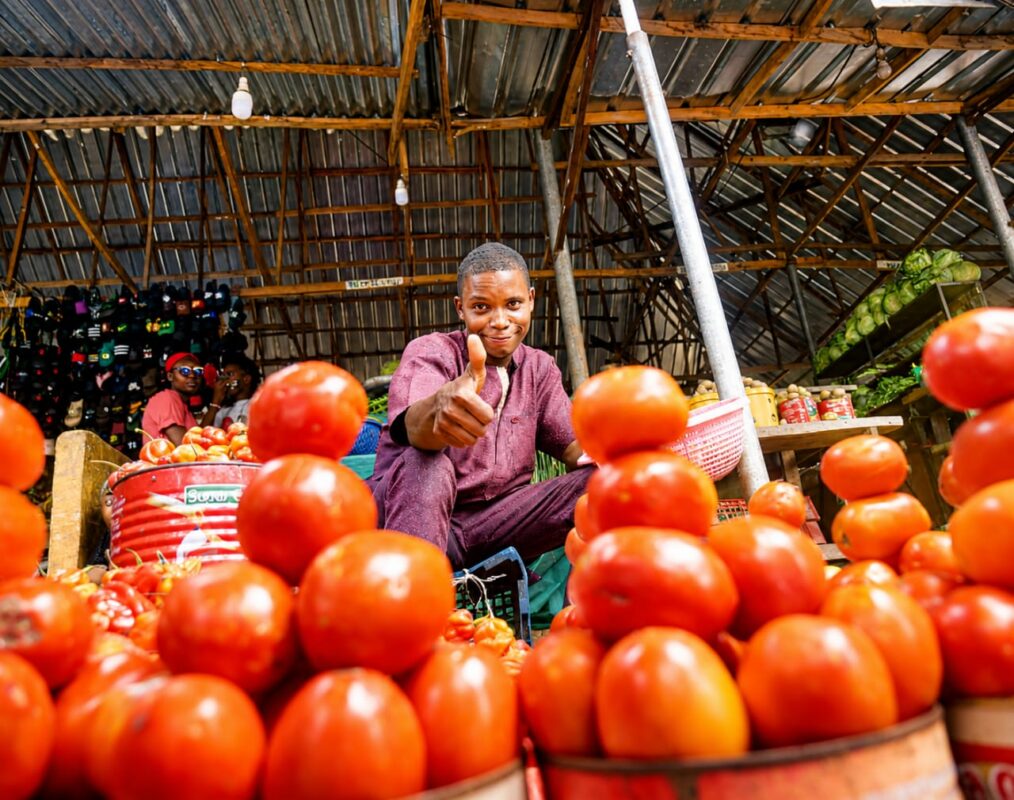
A Happy Coldhubs Customer
The equation becomes:
Cold storage → more time → better flexibility → reduced spoilage → stronger income potential
The Cost of a Forced Sale
A distress sale can have several consequences.
A trader may accept a lower price simply to avoid losing the product completely.
A farmer may reduce the value of a harvest because there is no safe place to hold it.
A fish seller may process or dry unsold fish when fresh sales are no longer possible.
A market trader may throw away products that could have been sold the following day.
These are not just food losses.
They are income losses.
And for small businesses operating with limited margins, repeated losses can make it harder to replace stock, pay workers, cover transportation costs, or invest in the next tr
ading cycle.
A Cold Room Creates an Option
This is where cold storage becomes more than infrastructure.
It creates an additional business option.
Instead of having only two choices—sell immediately or lose the product—a trader can introduce a third:
store, preserve and sell later.
That option can provide greater flexibility.
For example, a vegetable trader who normally has to sell all remaining stock at the end of the day may be able to store unsold produce and continue selling it when customers return.
Similarly, a fish trader can preserve unsold fish instead of being forced to sell it at a reduced price or process it simply because there is no refrigeration available.
The objective is not to encourage traders to hold products indefinitely.
It is to give them more control over their inventory.
This Is Why Cold Storage Matters
Cold chain is often discussed in terms of temperature.
But for smallholder farmers and traders, its value can also be understood in terms of time and choice.
Reliable refrigeration can help:
Reduce spoilage
Protect product quality
Reduce pressure to make distress sales
Give traders greater inventory flexibility
Improve the availability of fresh food
Protect the value of farmers’ and traders’ investments
And when less food is lost, fewer resources invested in producing that food are wasted.
Built Around African Market Realities
In many African markets, reliable electricity and affordable refrigeration remain challenges.
This is why ColdHubs uses solar-powered cold storage to provide refrigeration closer to the markets and communities where perishable food is produced and traded.
The goal is practical: help farmers, traders and food businesses preserve their products without requiring them to depend entirely on conventional grid electricity.
Through its pay-as-you-store model, ColdHubs also allows users to access cold storage according to their needs rather than requiring them to invest in and operate their own large refrigeration facility.
The Real Value of Cold Storage
The value of cold storage is not simply that a tomato remains cold.
It is that the tomato remains saleable.
It is that the trader has more time.
It is that the farmer has another option.
It is that fewer products are lost simply because the clock ran out.
Ultimately, cold storage can help shift the economics of perishables from urgency to choice.
Because sometimes, the biggest cost of food loss is not what gets thrown away.
It is what farmers and traders are forced to give up by selling too early.
And when cold storage gives them more time, it can give them something even more valuable:
the ability to make better business decisions.