
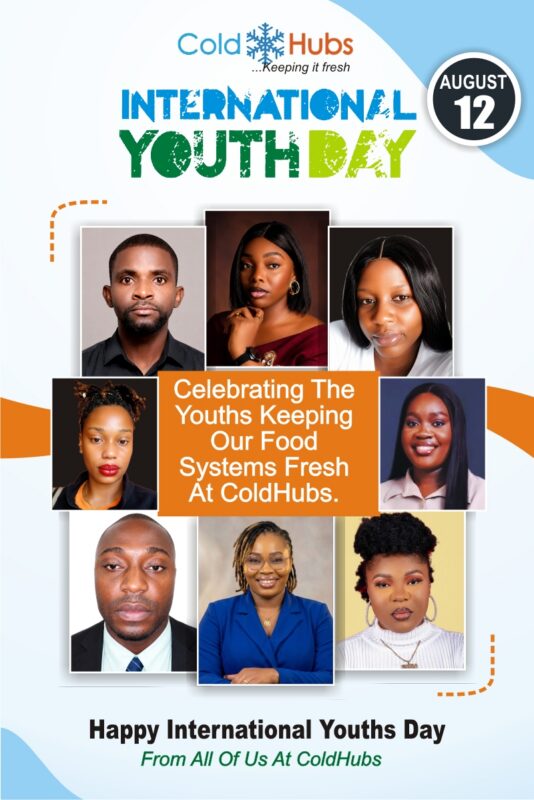
How Young People at ColdHubs are Helping Build Africa’s Food Systems
Every year on 12 August, the world marks International Youth Day-a day to recognise the contributions of young people and reflect on the opportunities, challenges, and aspirations that shape their lives.
The 2026 theme, “Different Contexts, Common Aspirations,” highlights an important reality. The reality that young people may live in different communities, work in different sectors, and face different circumstances. Yet share common aspirations for meaningful work, economic opportunities, skills development, and a better future.
At ColdHubs, this shared aspiration is reflected within our own workforce.
88% of ColdHubs’ workforce is below the age of 35.
This means young people form a significant part of the team working to expand ColdHubs sustainable cold chain solutions for farmers, traders, fisherfolk, and food businesses across Africa.
Different Contexts, Common Aspirations
Young people across Africa do not all experience the same realities.
A young person working in a busy market may face different challenges from one working in a technical environment. A young professional in a city may have different opportunities from someone living in a farming community.
Yet across these different contexts, there are common aspirations.
Young people want opportunities to work, learn, earn, innovate, contribute, and build sustainable livelihoods.
The food and agriculture sector provides an important space for these aspirations to become reality.
Young People Are Building Solutions Today
Africa’s food system faces significant challenges.
Farmers and traders lose valuable produce because of inadequate storage. Perishable food deteriorates during transportation. Businesses struggle with unreliable power and limited access to appropriate cold chain infrastructure.
Solving these problems requires more than technology.
It requires people.
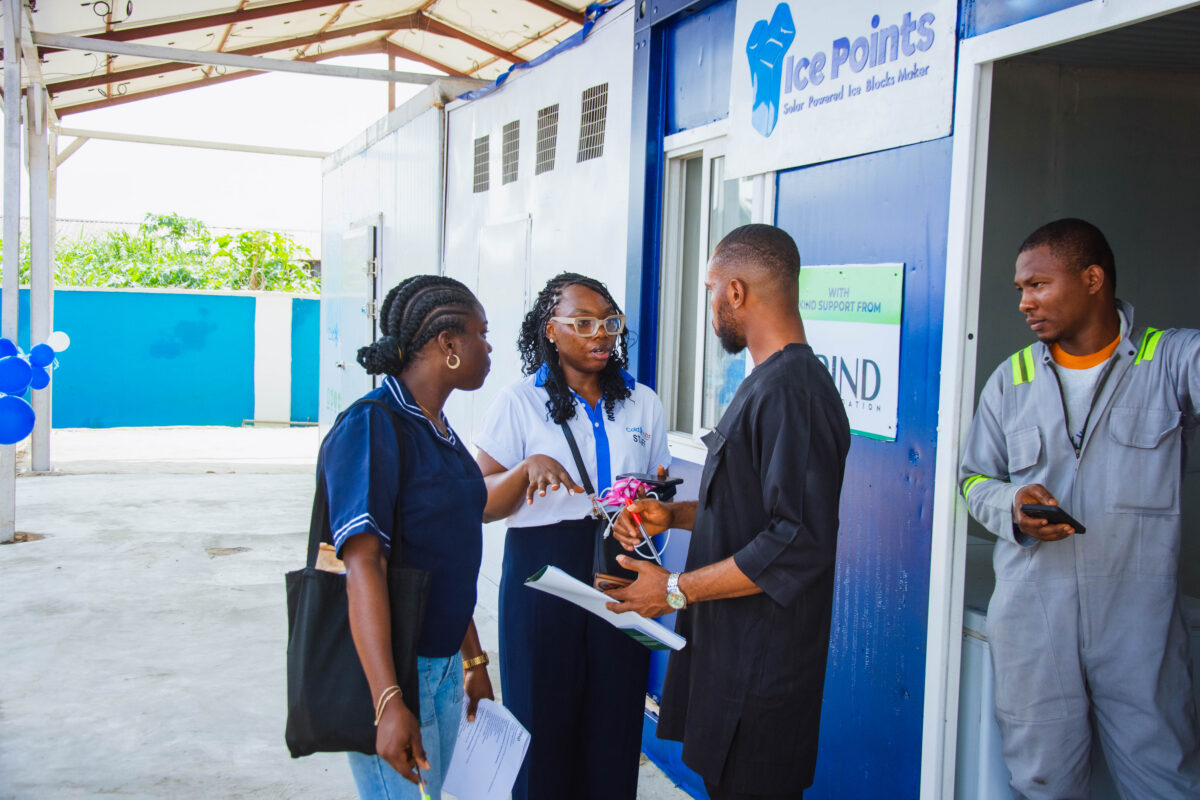
People who can operate and maintain cold storage facilities. People who understand refrigeration and solar energy. People who manage logistics, serve customers, develop businesses, and create awareness about food preservation.
Young people are already contributing to these areas at ColdHubs.
With 88% of our workforce below 35, young professionals are helping deliver solutions that address food loss while supporting livelihoods and food security.
From Cold Storage to Career Opportunities
Cold chain is a growing area of opportunity at the intersection of several important sectors:
Agriculture
Renewable energy
Refrigeration and cooling
Logistics
Technology
Business and entrepreneurship
As Africa invests in stronger food systems, demand will continue to grow for people with the technical, commercial, and operational skills needed to make these systems work.
A solar-powered cold room, for example, is much more than a building with refrigeration equipment.
It requires people to operate the facility, maintain systems, support customers, manage storage, coordinate activities, and ensure that farmers and traders receive reliable service.
This creates opportunities for young people to build practical experience while contributing to an important economic and environmental challenge.
Beyond Jobs: Building Skills
Youth employment should not only be about having a job.
It should also be about developing skills, experience, confidence, and opportunities for progression.
Working within the cold chain sector can expose young professionals to real-world applications of refrigeration, renewable energy, logistics, agriculture, customer service, business development, and operations.
These experiences can help young people build careers while also equipping them to create solutions of their own.
A Young Workforce Supporting a Changing Food System
The future of Africa’s food system will require innovation.
Solar-powered refrigeration, temperature-controlled transportation, improved storage, digital technology, and more efficient logistics will increasingly shape how food moves from farms to consumers.
Young people have a role to play in this transformation.
They are made up of refrigeration technicians, renewable-energy specialists, logistics professionals, agricultural entrepreneurs, technology developers, business managers, and food-system leaders.
The opportunities are diverse because the challenges are diverse.
88%: A Statistic With a Story
88% of ColdHubs’ workforce is below 35.
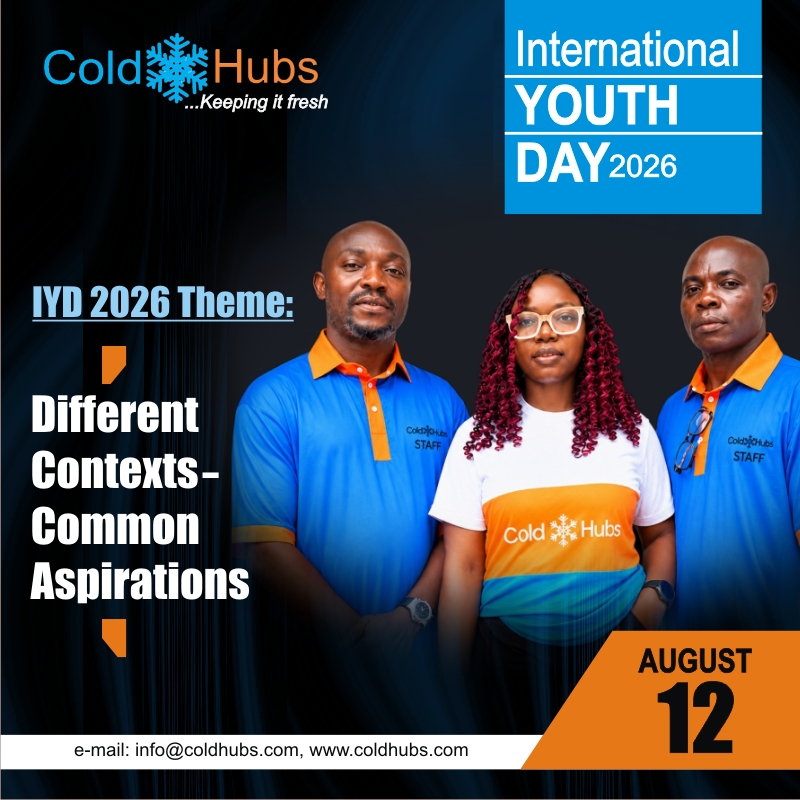
Behind this figure are individuals with different backgrounds, skills, responsibilities, experiences, and aspirations.
They may work in different roles and operate in different environments, but they contribute to a common mission: using practical innovation to reduce food loss, strengthen livelihoods, and build more resilient food systems.
This is where the 2026 theme, “Different Contexts, Common Aspirations,” resonates strongly.
Different people.
Different roles.
Different experiences.
But common aspirations-to learn, to work, to grow, and to contribute to something meaningful.
Young People Are Not Waiting for the Future
Young people are often described as the leaders of tomorrow.
But across Africa, young people are already solving problems today.
They are working in agriculture, technology, renewable energy, logistics, manufacturing, healthcare, finance, and countless other sectors.
At ColdHubs, they are helping operate and expand infrastructure that allows farmers, fisherfolk, traders, and food businesses to preserve more of what they produce.
Their contribution demonstrates an important point:
Youth participation in Africa’s development is not a future possibility. It is already happening.
Looking Ahead
As ColdHubs continues to expand its cold chain solutions across Nigeria and beyond, young people will remain an important part of that journey.
The challenge is not only to create more jobs, but to create opportunities where young people can develop skills, solve problems, build careers, and contribute to sustainable economic development.
This International Youth Day, we celebrate the young people within ColdHubs and the millions of young Africans working every day to build better futures in their own communities.
Their contexts may be different.
Their paths may be different.
But their aspirations are often remarkably similar.
Different contexts. Common aspirations. A shared future where food is preserved.