
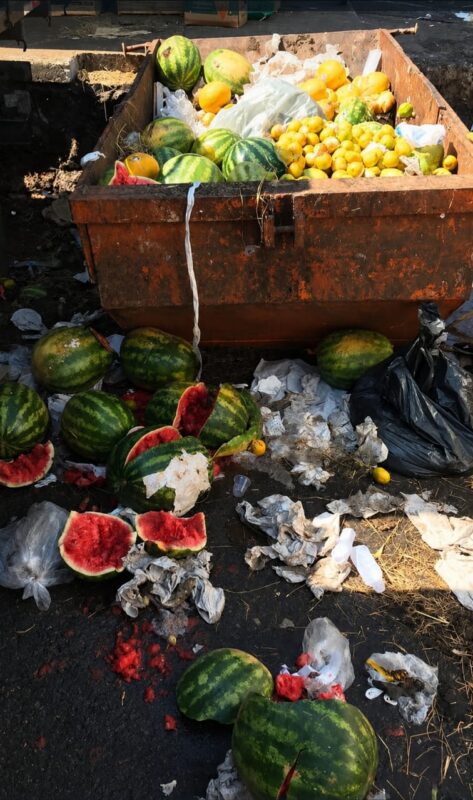
Photo credit : Jumo Magazine
A Question That Stirred Conversations Beyond the Camera
“Every plate tells a story. Sometimes it tells the story of abundance. Other times, it echoes the silence of an empty stomach.”
Imagine leaving a restaurant with half your meal untouched, scraping perfectly edible food into a bin after a family celebration, or watching fresh tomatoes spoil because there was nowhere cool enough to store them.
Now imagine being fined or even prosecuted for it ?
A bold question. An uncomfortable thought. Yet one that is steadily finding its way into conversations about food security around the world.
Sometime in June, ColdHubs took that question to the streets.
Should food waste be criminalised in Nigeria?
The responses were as diverse as the people we met.
click here to watch the video.

Respondents (L-R): Samuel Ukaga, Ms. Vannessa and Christain Uche.
When Every Grain Counts
For many respondents, the answer came without hesitation.
Yes.
Their argument was rooted not in punishment, but in compassion.
They asked, can a nation where millions struggle to afford a daily meal accept the careless disposal of edible food as normal? To them, wasting food is more than a personal choice. It is a moral issue with social consequences.
Some believed stricter laws would encourage households, restaurants, event planners, and businesses to become more intentional about consumption, food donation, and responsible disposal.
Their message was simple:
“When others are hungry, food deserves greater respect.”
Can the Law Solve What The Society Created?
Others viewed the issue through a different lens.
While acknowledging that food waste is a growing concern, they questioned whether criminalisation is the right response.
Would punishment address the root causes of waste?
What about poor storage facilities, unreliable electricity, weak transportation systems, inadequate market infrastructure, and limited awareness about food preservation?
Many argued that before introducing penalties, Nigeria must first create the conditions that make food preservation easier than food waste.
Education, infrastructure and innovation, they suggested, should come before legislation.
The Waste We Don’t Always See
Food waste is often imagined as leftovers scraped into rubbish bins.
But much of it happens long before food reaches our plates.
A basket of tomatoes spoiled under the afternoon sun.
Fresh fish that couldn’t be kept cold.
Vegetables abandoned because they deteriorated before buyers arrived.
Across the food value chain, post-harvest losses quietly remove tonnes of nutritious food from circulation every year. This happens not because people intended to waste it, but because preservation was out of reach.
The conversation, then, becomes much bigger than personal habits.
It becomes a question of systems.
Beyond the Debate
Whether food waste should become a punishable offence remains a matter for policymakers, legal experts, and society at large.
But one truth united almost everyone we spoke to:
Less food should be wasted.
Whether through smarter consumption, stronger cold chain infrastructure, improved logistics, better market planning, food donation programmes, or greater public awareness, preserving food benefits everyone.
Because every harvest saved strengthens food security.
Every kilogram preserved protects livelihoods.
Every meal rescued becomes an opportunity to nourish someone else.
Perhaps the real challenge is not deciding how to punish waste but discovering how to prevent it.
What Do You Think?
The conversation doesn’t end here. It begins with you.