
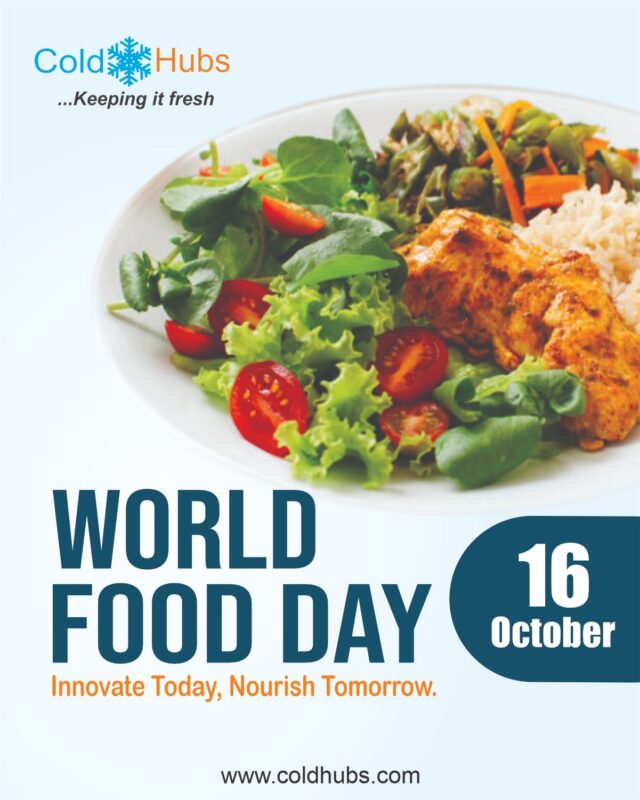
World Food Day 2026 | Innovate Today. Nourish Tomorrow.
The food industry is getting smarter. Technology is transforming farms, markets and supply chains. Yet one uncomfortable question remains: are we innovating to nourish people, or simply to make the food system more efficient?
Imagine two shopping baskets.
The first contains filling, affordable staple foods. The second contains a more diverse selection of vegetables, fruits, legumes and other foods that contribute to a balanced diet.
For a household working with a limited budget, the decision may not be about what it would prefer to eat. It may be about what it can afford.
This is where the conversation about food innovation becomes more complicated.
A country can improve agricultural productivity, introduce new technologies and expand food distribution without automatically making a healthy diet accessible to everyone.
Food availability is not the same as food affordability. And food affordability is not the same as good nutrition.
That distinction deserves attention this World Food Day, celebrated on 16 October under the theme “Innovate today. Nourish tomorrow.”
The Food and Agriculture Organization of the United Nations (FAO) frames this year’s theme around forward-thinking solutions, traditional knowledge and inclusive approaches that help everyone access sufficient, diverse, safe and nutritious food while safeguarding the planet.
But the theme also presents an important test for the food industry: innovation should be judged not only by what it produces, but by whether it improves people’s ability to eat well.
The Food System Has an Innovation Problem. But Is It the One We Think?
When we talk about innovation in food and agriculture, the conversation often gravitates towards higher yields, precision farming, improved seeds, digital platforms, automated equipment and new production methods.
These developments matter. Producing enough food is essential.
But the ability to produce food is only one part of a much larger system. Food must also be processed, transported, stored, sold and made accessible to people with different incomes and nutritional needs.
The 2026 edition of the UN’s State of Food Security and Nutrition in the World, prepared by FAO, IFAD, UNICEF, WFP and WHO, brings this challenge into focus.
Its findings indicate that 66.6% of Africa’s population could not afford a healthy diet in 2025.
This is not simply a problem of consumer awareness. It raises questions about the economics of the food system: how food is produced, what it costs to move and market it, and how those costs shape the prices people eventually face.
Source: SOFI 2026 — findings on the cost and affordability of healthy diets.
The uncomfortable implication is that a more technologically advanced food system does not necessarily become a more nourishing one.
We can innovate at the point of production and still leave the economics of eating well largely untouched.
The challenge, therefore, is not to abandon agricultural innovation. It is to widen our definition of success.
Here Is Where the Cost of Moving Food Matters
What happens to food between the farm and the consumer is often treated as a technical matter for transport companies, warehouses, processors and retailers.
But those activities are also part of the economics of nutrition.
According to FAO’s 2026 analysis, post-farmgate activities account for approximately 70–75% of what consumers pay for food, with processing, logistics and wholesale contributing up to 40% of total costs.
These figures do not mean that every part of the cost can be eliminated, or that one intervention will automatically lower retail prices. Food prices also reflect production costs, labour, energy, financing, market conditions, regulation and the margins of businesses across the chain.
They do, however, point to a major opportunity: improving how food moves through the system can matter to the final cost of eating.
Source: FAO, SOFI 2026 analysis of healthy-diet affordability.
Consider the journey of a nutritious but perishable product.
It must be collected, handled, stored and transported under conditions that help maintain its quality. Businesses must manage energy, labour, packaging, inventory and delivery. Each stage has an operating cost, and inefficiencies can add to the final price.
This makes logistics more than a matter of convenience.
It is part of the infrastructure that determines how efficiently food reaches consumers.
If we are serious about making nutritious foods more accessible, we need to examine not only what happens on farms, but also the systems connecting farms, markets, retailers and households.
The Case for Cold Chains Is Bigger Than Preventing Food Loss
Cold-chain conversations often begin and end with preservation. That is understandable: appropriate temperature control can help maintain the quality and safety of perishable products.
But cold-chain infrastructure has another role to play in the wider food system. It can support the more efficient movement of temperature-sensitive foods and help businesses manage the operational challenges associated with them.
This is particularly relevant for foods such as vegetables, fruits, fish, meat and dairy, which require suitable handling and storage conditions.
Solar-powered cold storage, ice services and refrigerated transportation are examples of infrastructure that can support this part of the food journey.
Their value, however, should be assessed carefully.
A cold room does not automatically make food affordable. Refrigerated transportation does not guarantee that retail prices will fall. And greater efficiency at one point in a supply chain does not guarantee that consumers will receive the full benefit.
The outcome depends on how the system operates, the costs it replaces or adds, demand, access to services, market competition and whether efficiency gains reach buyers and consumers.
Cold-chain infrastructure is not a complete answer to food affordability. It is one part of the system that can help address the cost and reliability of supplying perishable foods.
That is a more useful way to think about innovation: not as a single machine or breakthrough, but as one intervention within a network of connected decisions.
What Should Food Innovation Be Expected to Deliver?
If World Food Day’s theme is to mean more than a celebration of new ideas, the innovations we support should answer some difficult questions.
1. Does it make nutritious food easier to access?
An innovation should be assessed against the problem it is intended to solve. Does it help food reach underserved markets? Does it improve the availability of diverse foods? Does it help businesses supply customers more reliably?
The answer will depend on the location, the food involved and the people meant to benefit.
2. Does it address a real cost?
A solution may improve efficiency while introducing other expenses. Energy, maintenance, transport, storage fees and financing all matter.
The useful question is not simply whether the technology works, but whether it makes the overall system more efficient and commercially viable.
3. Can the benefits reach consumers?
If a new system reduces the cost of handling or distributing food, how much of that benefit reaches the people buying it?
This requires more than technology. It may involve competition, market access, appropriate policies, transparent pricing and stronger links between producers and buyers.
4. Does it work for the people who need it?
A sophisticated solution that only large businesses can afford may have limited relevance to small-scale farmers, traders or community markets.
Inclusive innovation considers who can use the solution, who pays for it and whether it fits local needs and conditions. It can combine new technology with existing knowledge and practices that already work within communities.
5. Can its impact be measured?
Success should not be reported only in terms of equipment installed, capacity created or products handled.
Depending on the intervention, useful measures may include operating costs, reliability of supply, access to nutritious foods, service affordability, customer reach and the extent to which savings are passed along the supply chain.
These questions shift the conversation from innovation as an activity to innovation as an outcome.
Innovation Must Connect the Food System, Not Just Upgrade One Part of It
No single organisation can solve the affordability challenge alone.
Farmers need productive and resilient growing systems. Food businesses need workable routes to market. Transporters and storage providers need reliable operations. Retailers need dependable supplies. Consumers need nutritious foods that fit their budgets. Governments and development partners influence the infrastructure, rules and investments that shape the whole system.
The FAO’s 2026 analysis highlights investments in infrastructure, research and development, roads, logistics and cold chains—alongside policy measures—as part of the wider response required to make healthy diets more affordable.
This has an important implication for businesses and institutions investing in food innovation: isolated improvements may not be enough.
A new technology can solve one bottleneck. But unless the connected parts of the system function well, the wider benefit may remain limited.
The next generation of food innovation must therefore be judged by its ability to connect production with markets, efficiency with affordability, and technical improvements with real human needs.
The Real Test of “Innovate Today. Nourish Tomorrow.”
Perhaps the most important question for World Food Day is not how many new technologies the food system can introduce.
It is what those technologies make possible.
Can more people afford diverse, nutritious food? Can businesses supply it efficiently? Can infrastructure work for different kinds of producers and markets? Can innovations reduce costs without compromising food safety, livelihoods or environmental priorities?
The answers will not come from one invention or one organisation. They will require practical solutions, better evidence, inclusive investment and cooperation across the food system.
The 2026 theme, “Innovate today. Nourish tomorrow,” challenges us to look beyond innovation for its own sake.
Because the future of food should not be measured only by how much we produce or how advanced our technology becomes.
It should also be measured by whether people can access the food they need to live healthy lives.
A smarter food system is a good start. A more nourishing one is the goal.
Explore Cold-Chain Solutions
ColdHubs provides cold-chain services for businesses and organisations handling perishable products, including solar-powered cold storage, ice and refrigerated transportation.
Visit www.coldhubs.com or email info@coldhubs.com to explore solutions for your operation.
References and further reading
- FAO — World Food Day 2026: Innovate today. Nourish tomorrow.
- FAO — Statement on the cost of a healthy diet, July 2026
- FAO, IFAD, UNICEF, WFP and WHO — The State of Food Security and Nutrition in the World 2026
- WHO — Healthy diet: key facts and principles