
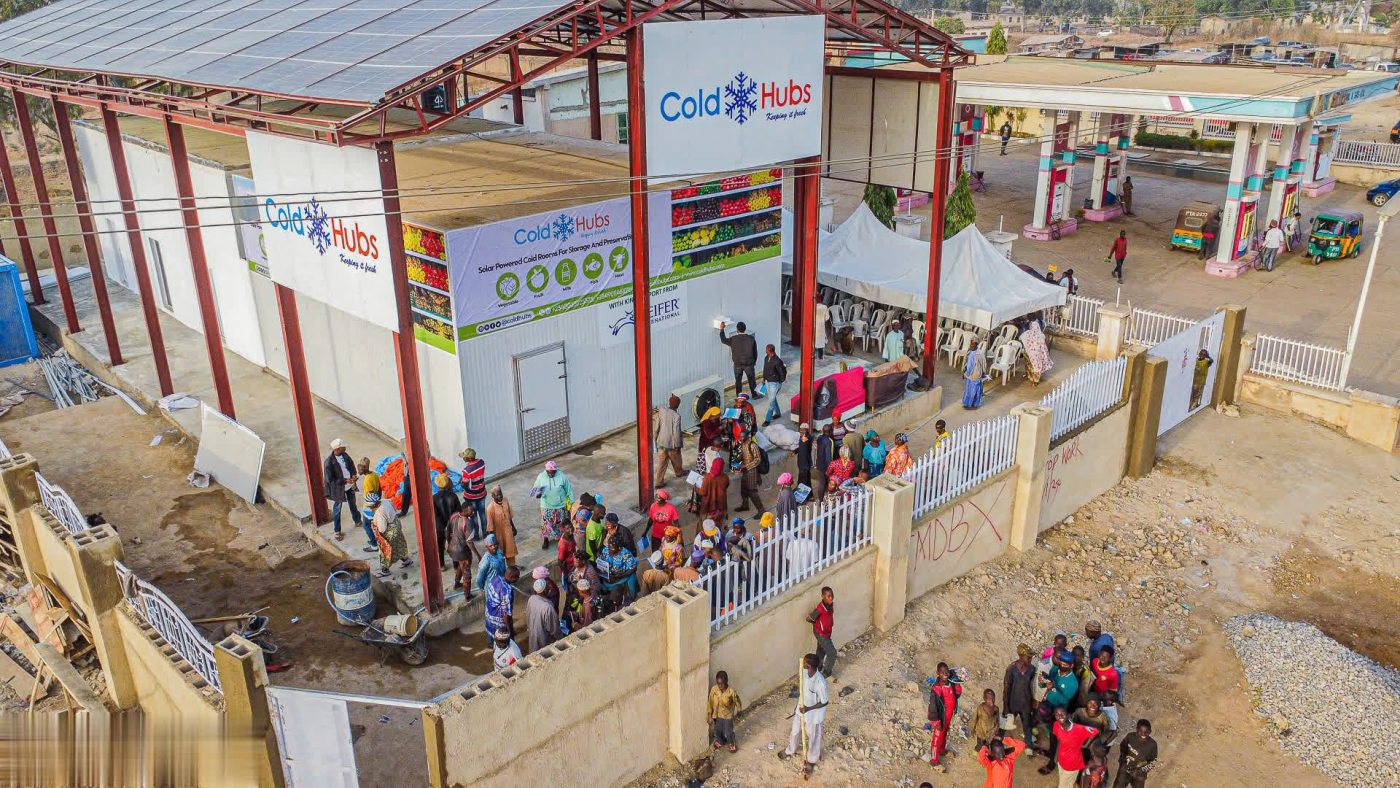
Food waste is not just an economic problem—it is an environmental one.
Every spoiled crate of tomatoes, green beans, or carrots represents wasted water, wasted energy, and avoidable greenhouse gas emissions. In a country where food demand is rising, losing up to 30–50% of fresh produce after harvest is not sustainable—for farmers, for businesses, or for the planet.
Globally, nearly one-third of all food produced is lost or wasted. This contributes up to 10% of total greenhouse gas emissions. When organic waste ends up in landfills, it produces methane—a gas significantly more potent than carbon dioxide.
This shifts the conversation.
The question is no longer just how to store food better.
It is how to build systems that prevent waste at every stage of the value chain.
At ColdHubs, the approach is simple: solve the problem end-to-end.
An integrated cold chain ecosystem includes:
Solar-Powered Cold Storage
Extending shelf life from 2 days to 21+ days using clean, renewable energy—reducing dependence on diesel and unreliable grid power.
Durable Plastic Crates
Replacing traditional packaging that causes crushing and spoilage, while improving airflow, hygiene, and handling efficiency.
Refrigerated Transport Systems
Reducing transit losses by 25–30% and ensuring produce arrives fresh across long distances.
Ice Points for Small-Scale Traders
Providing accessible cooling solutions for last-mile vendors who often lack storage options.
Each intervention solves part of the problem.
Together, they transform the system.
For traders like Oge at Relief Market, Owerri, the impact is immediate:
“Before, I rushed to sell because tomorrow meant spoilage. Now, I can plan—and nothing goes to waste.”
That shift goes beyond income.
It reduces pressure on natural resources, cuts emissions, and improves food availability.
Sustainability is not built through awareness alone.
It is built through systems that work—consistently, efficiently, and at scale.
This Earth Day, the focus must move from conversation to action.
Join the cold chain ecosystem.
Store smarter. Transport better. Waste less.
Because protecting the planet starts with preserving what we grow.